
Thank you for Subscribing to Food Business Review Weekly Brief

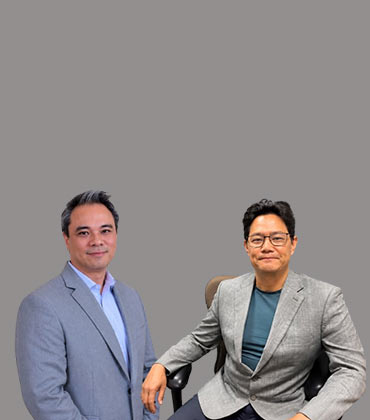 Jerry Yeung, CEO and John Huang, Head of Human Resources
 We Support the People Behind Food
What drew me to this industry was not simply food; it was the people behind the food.
When you work closely with restaurants, you quickly realize that many of them are more than businesses. They represent years of hard work, family investment and, for many immigrant entrepreneurs, an opportunity to build something in a new country. A missing product or a late delivery may look like a small operational issue from the distributor’s side, but for a restaurant owner, it can affect an entire day of business.
My own journey at S.J. Distributors allowed me to see the business from many different perspectives, including operations, people management, compliance and strategy. That experience changed the way I think about distribution.
"Food distribution is more than moving products—it is about moving trust. When our customers can depend on us through both the predictable and the unexpected, we become more than a supplier; we become part of their success."
I learned that our job is not simply to move products from a warehouse to a restaurant. Our job is to make our customers' operations easier and more predictable.
That philosophy continues to shape how we serve customers today. We try to understand how each customer operates, what challenges they face and what we can do behind the scenes so they can focus on serving their own customers.
Preparation Protects Customer Consistency
The biggest challenge today is that almost everything is connected.
A disruption thousands of miles away can eventually affect a restaurant kitchen in California. Weather, transportation capacity, labor availability, regulatory changes, commodity pricing and international supply conditions can all influence whether a product arrives when expected and at the quality and price customers need.
At the same time, restaurant customers expect greater consistency. Their customers order the same dish and expect it to taste the same every time. That means consistency at the restaurant level starts much earlier in the supply chain.
For us, reliability therefore cannot depend on one supplier, one route or one solution. It has to come from preparation.
We work on supplier relationships, product alternatives, inventory visibility, logistics planning and communication at the same time. Technology helps us see problems earlier, but relationships and experienced people are what help us solve them.
In this industry, you cannot eliminate uncertainty. What you can do is build an organization that responds to uncertainty faster.
Good Service Has No Template
We start by accepting that there is no single definition of good service.
A small family restaurant may have limited storage and need smaller, more frequent deliveries. A high-volume buffet may care more about continuous availability and consistent specifications. A multi-location restaurant group may need standardized products, centralized communication and very predictable delivery schedules.
Those customers should not all be served in exactly the same way.
Our approach is to connect information across sourcing, inventory, sales and distribution. The better we understand a customer's purchasing patterns and operating requirements, the better we can prepare inventory and delivery capacity around them.
We also believe strongly in communication between our frontline employees and our operating teams. Salespeople and drivers often understand changes in a customer's business before those changes appear in a report. That information is extremely valuable.
Technology gives us data, but people give that data context. When the two work together, we can become much more proactive rather than simply reacting to orders.
Trust Is Built Under Pressure
Trust is usually built when something does not go perfectly.
When everything is going according to plan, it is easy for any supplier to look good. The real test comes when a product is unavailable, a shipment is delayed, a customer suddenly needs more inventory or something arrives differently than expected.
Our philosophy is very simple: communicate early, be transparent about the situation and focus on finding a solution.
-
Every restaurant represents someone’s dream, investment and family. If we can help protect that, lighten their workload and give them one less thing to worry about, they can focus on what they do best, creating great food and bringing happiness to the people they serve.
Sometimes the solution is an alternative product. Sometimes it is changing a delivery. Sometimes it means our team has to do extra work internally to solve a problem the customer may never even see.
We also try to listen beyond the immediate order. When customers trust us enough to tell us what they are planning, what they are struggling with or where they want their business to go, we can prepare better and support them differently.
That is when the relationship changes.
You are no longer simply a company delivering cases of food. You become part of the customer's support system.
For me, that is what a long-term partnership should look like.
Problems Reveal the Real Partnership
One lesson we learned very clearly during major supply disruptions was that maintaining service does not mean simply finding another product. The replacement still has to work for the customer's operation.
We have had situations where products became difficult to source or increased significantly in price. For a restaurant, simply telling them that the market changed does not solve the problem.
Our teams worked across purchasing, sales and operations to identify alternatives, verify availability and specifications, and then communicate those options to customers. In some cases, we arranged for customers or their chefs to evaluate alternative products before making a change.
That step is important because two products may look similar on a specification sheet but perform very differently in a kitchen.
At the same time, our logistics teams adjusted inventory and delivery planning so that changes in sourcing would create as little disruption as possible for the customer.
Those experiences reinforced something I strongly believe: resilience is not one department's responsibility.
Purchasing cannot do it alone. Logistics cannot do it alone. Sales cannot do it alone. Reliable service happens when information moves quickly across the organization and people are empowered to solve problems together.
Reliability Makes You Indispensable
Learn the entire business, not only your own position.
Wholesale food distribution looks simple from the outside, a product comes in and a product goes out. But behind every delivery are purchasing decisions, inventory management, food safety, warehouse operations, transportation, customer relationships, technology, finance and, most importantly, people.
The professionals who grow the most are usually the ones who become curious about how all of those pieces connect.
I would also tell younger professionals not to underestimate the value of reliability. You do not always need to be the smartest or loudest person in the room. Be the person others know they can depend on. Follow through on what you say you will do, and take the time to understand the problem before offering a solution.
It is also important to remember that, for many small restaurant owners, the restaurant is not just a business, it is their family’s livelihood. Their profit margins are often extremely thin, so even a relatively small disruption can determine whether they make money or lose money that month.
When something goes wrong, take responsibility for helping solve the problem as quickly as possible. Reliability is not just about doing your job well; it is about understanding how your actions affect the people who depend on you and being there when they need you most.
Technology will continue to change our industry, and AI and automation will make many processes faster. But I believe the fundamental value of this business will remain very human.
Food connects people. Restaurants serve communities. And distributors help make those connections possible.
If you understand that responsibility and genuinely care about the success of the people you serve, this can be an incredibly meaningful industry in which to build a career.
Choosing a Wholesale Food Supplier That Protects Daily Service
A restaurant can lose more than a dinner rush when a distributor misses the mark. A delayed case of seafood, a missing specialty ingredient, a shorted produce order or a thawed product forces managers to rewrite menus and disappoint regular customers while absorbing costs that rarely appear on an invoice. For foodservice buyers, wholesale supply is not a back-room purchase. It sits close to margin control, kitchen trust, menu continuity and the reputation of every plate leaving the pass.
The sharper test is how well a supplier understands the rhythm of the account it serves. Broad catalogs matter, but a restaurant built around regional cuisine cannot treat ingredients as interchangeable stock units. A supplier serving diverse foodservice operators has to read demand by cuisine, language, ordering habits and local consumption patterns. This requires suppliers to source beyond mainstream items while carrying enough range to protect menu identity and spare smaller operators from juggling too many disconnected vendors.
Freshness control is equally unforgiving. Longer delivery routes, wider service areas, mixed inventories and varied product temperatures make temperature discipline a daily management problem, not a promise printed on a sales sheet. Buyers should look for refrigerated fleet practices, inventory accuracy, product checks before dispatch and delivery schedules that fit the customer’s business hours rather than the distributor’s convenience. The better model reduces guesswork before the truck leaves the warehouse.
Scale adds another layer. Many independent restaurants buy in narrow windows, adjust orders late, change pack sizes without much notice and depend on regular drivers who understand back-door constraints. Chain accounts may need broader volume planning, while smaller kitchens need a distributor that can explain substitutes before service is affected. A supplier’s internal habits become visible in how it forecasts demand, protects scarce items, handles delivery timing and keeps communication close enough to prevent small errors from spreading.
Supplier selection deserves closer scrutiny Foodservice buyers inherit upstream risk when storage lapses, weak traceability, inconsistent standards and price-driven substitutions are allowed to enter the supply chain. A dependable wholesale partner does not treat compliance as a final inspection. It builds its vendor list around regulated handling, clear records, product fit and a willingness to support the independent operators that depend on stable access.
Technology should make that relationship more practical, not more distant. Real-time delivery updates, accurate inventory views, direct communication and staff who can work in the customer’s preferred language can prevent small service issues from becoming kitchen problems. For immigrant-owned and minority-owned restaurants in particular, language access is not a courtesy. It affects order accuracy and trust.
S.J. Distributors fits this buying logic because its model is built around foodservice realities rather than catalog breadth alone. The company supplies fresh produce, frozen meats, seafood and dry goods, supported by cold-chain delivery, dispatch capacity, tracking systems and multilingual customer support confirmed in its service materials. It emphasize on careful vendor screening, freezer-equipped trucks, route planning around customer schedules and sourcing for culturally specific ingredients. For buyers that need a wholesale partner able to protect freshness while understanding diverse restaurant operators, S.J. Distributors offers a practical and restrained choice.
...Read more
Company :
S.J. Distributors LLC
Management Jerry Yeung, CEO and John Huang, Head of Human Resources
Description
“Every restaurant represents someone’s dream, investment and family. If we can help protect that, lighten their workload and give them one less thing to worry about, they can focus on what they do best, creating great food and bringing happiness to the people they serve.”